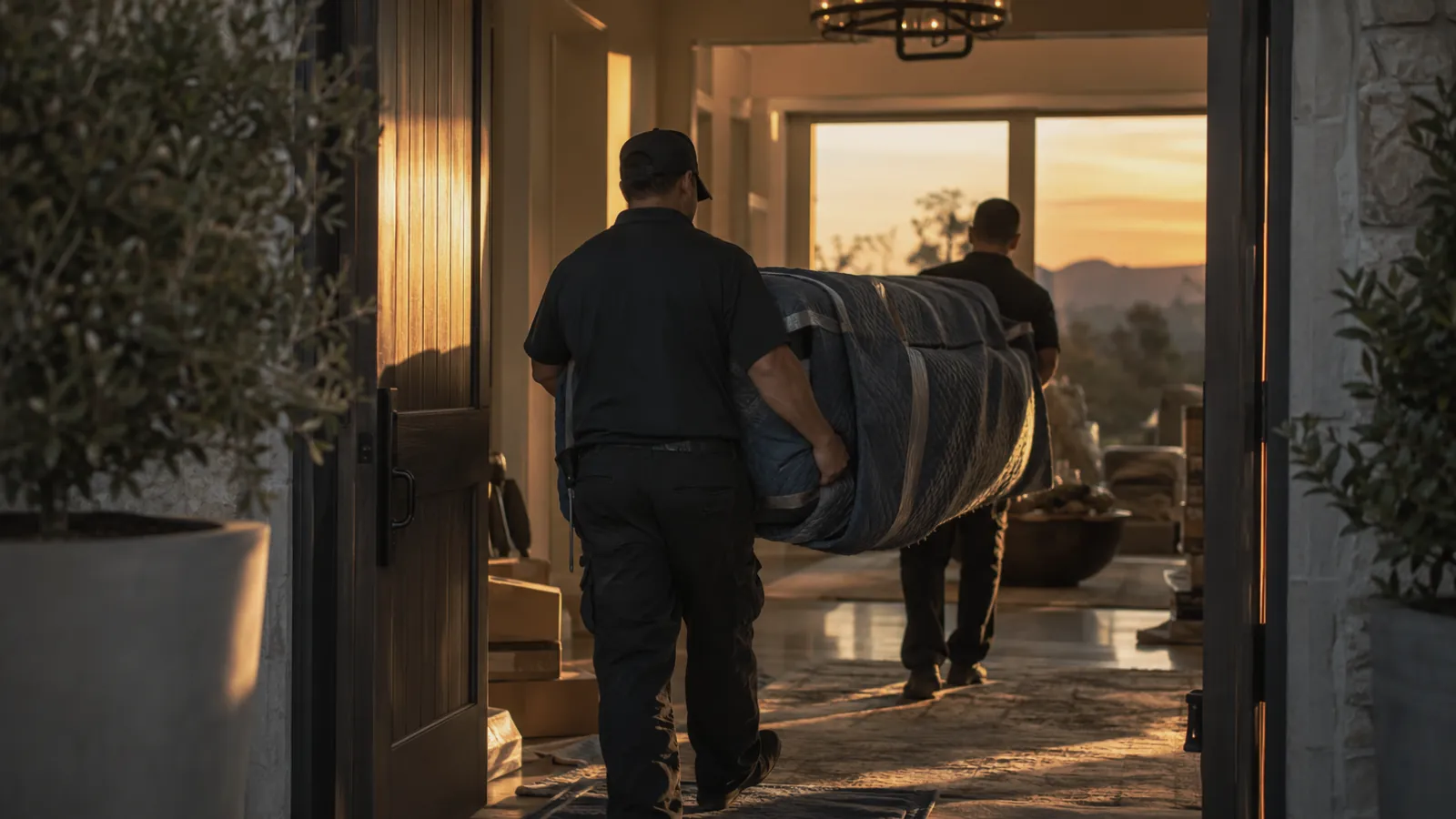
Narrow Delivery Windows and Calendar Sync: The Trust Economy of Luxury Logistics
Narrow windows and proactive communication have become the most undervalued features in white-glove delivery and luxury logistics.

Ask a luxury client what they're really paying for when they book white-glove delivery and you rarely hear "the polish of the crew." You hear "the certainty that I won't be stuck in my apartment all afternoon waiting for the buzzer." Time is the product. The polish is just evidence that the time was respected.
That is why delivery windows, narrow ones, communicated well and kept week after week, have quietly become the most important feature in luxury logistics. More than the truck. More than the uniforms. The window.
Why a four-hour window isn't a window
Most last-mile carriers treat a four-hour window as the best in the business. To a high-net-worth client, four hours is a hostage situation. Lunch gets cancelled. The cleaning service gets pushed. The client has already experienced your delivery as friction, and the truck hasn't left the yard.
A real luxury window is two hours, and one if you can manage it. And the width is only half of it. The client should hear from you thirty minutes before the crew arrives, with a name and a photo, the same way a rideshare app tells them the car is two minutes out. That one notification changes the whole tone of the visit from intrusion to service.
The calendar sync problem
The reason most operators can't offer a narrow window has little to do with capacity. The calendars are scattered. The crew calendar lives in one place. The dispatcher's schedule is a spreadsheet. The client's confirmation is a static email. When something changes, and something changes most days, the change doesn't travel. The crew shows up at the wrong time. The dispatcher promises a window the crew can't hit. The client hears two different stories from two different people.
Fixing it is plumbing work, and nobody puts plumbing in the brochure. But the operators who get it right have one source of truth that crew, dispatch, and the client all see in real time. When a crew runs long on the morning job, the afternoon client's window slides on its own and a message goes out. When a client reschedules, the crew knows before they leave the depot. The calendar is the operation.
What proactive communication actually means
"Proactive communication" has been said so often it has stopped meaning anything. In practice it comes down to three things.
The client never has to ask where the crew is, because the answer shows up before the question forms. Bad news goes out right away. A fifteen-minute delay communicated thirty minutes ahead is barely a delay; the same delay reported after the fact is a complaint. And the message is personal. "Marcus and Diego are on their way and should arrive at 2:15" is service. "Your delivery is en route" is a machine talking.
All three run on software, not goodwill. A dispatcher cannot personally text every client on a twelve-stop day. A platform can, with the dispatcher writing the templates once.
The trust compound
The interesting part starts around the third or fourth delivery to the same client. On the first one they're watching closely. Did the window hold, was the message clear, did the crew arrive when it said. On the second they're noticing a pattern. By the third they've stopped checking. They trust that you'll be there when you said you would. That trust is the thing they actually buy when they pay a premium, and it carries over into everything else you might do for them: storage, transport, installation, repair.
The operators who own this market have figured out that no single delivery pays for itself. The lifetime value of a client who never has to wonder whether you'll show up does. That client doesn't shop on price. They don't go read reviews of your competitors. They book the next job through you because the effort of looking elsewhere is worse than the bill.
A practical starting point
If you want narrower windows and don't know where to begin, pick your top twenty clients and give them a one-hour window for the next ninety days. Track exactly how often you hit it. Track what caused each miss. Fix whatever the misses point at, then widen the policy out. You'll learn more about your real capacity in three months than in three years of standard windows. And those twenty clients will tell their twenty friends, which is how this market has always grown.