What 'White-Glove Delivery' Really Means in 2026, and the Software Behind It
The phrase has been overused for a decade. Here's what white-glove delivery actually requires today, and the systems that make it possible.

Every furniture retailer, appliance store, and last-mile carrier now says it offers "white-glove delivery." The phrase has been watered down so far that a customer paying a premium for it has no idea what they'll get. If you run the real thing, a uniformed crew that shows up on time, puts the piece exactly where the client wants it, and leaves the room cleaner than they found it, that is a marketing problem and a margin problem at once.
Customers can tell the difference the moment they experience it. But you cannot deliver real white-glove service on the same software a parcel carrier uses. The work is different, so the requirements are different.
What white-glove actually requires
Real white-glove delivery is a sequence of small, expensive promises, kept in order.
- A precise delivery window, tighter than a four-hour block.
- Advance communication. The client knows the crew's name and ETA before the truck turns onto the street.
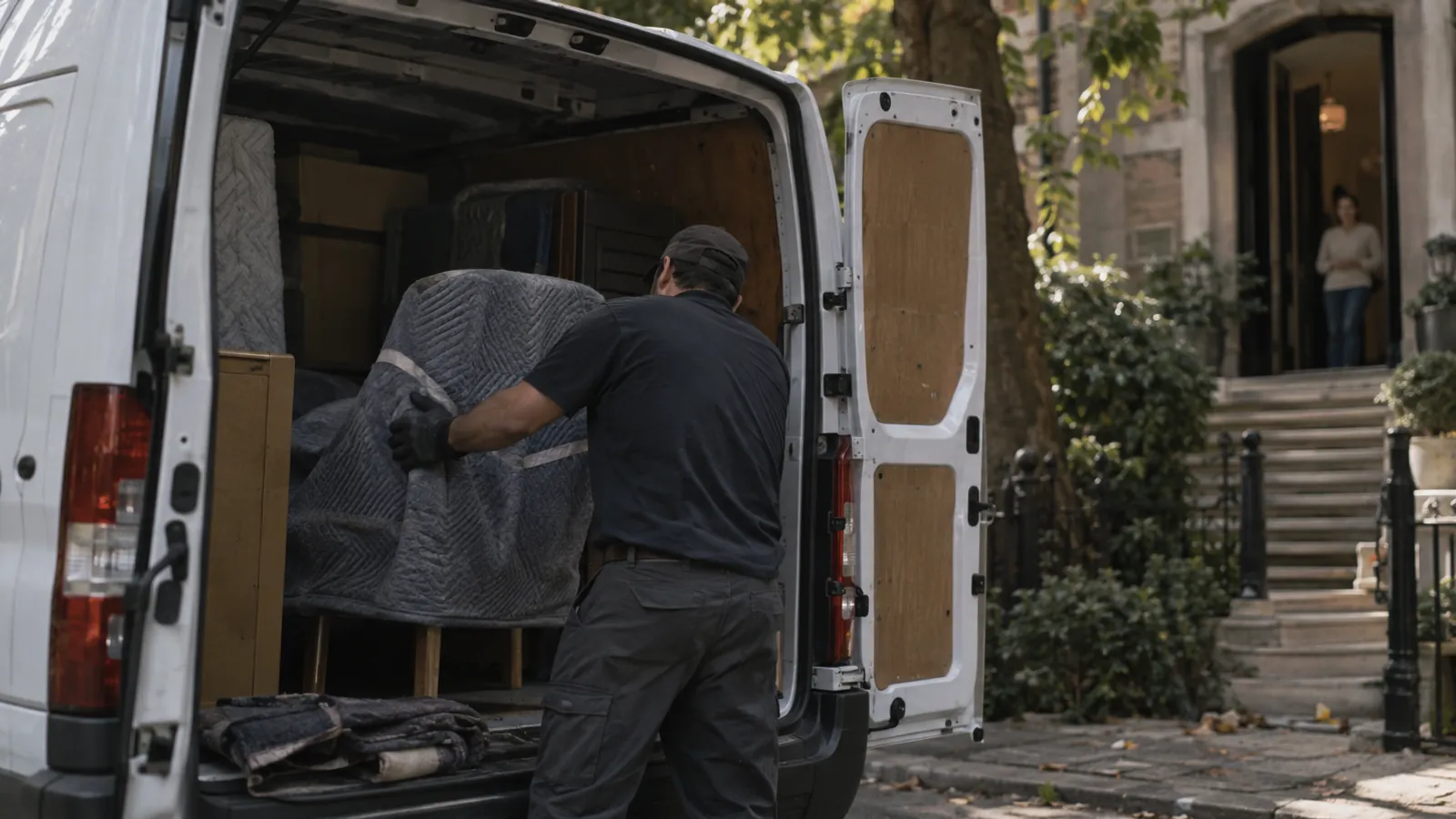
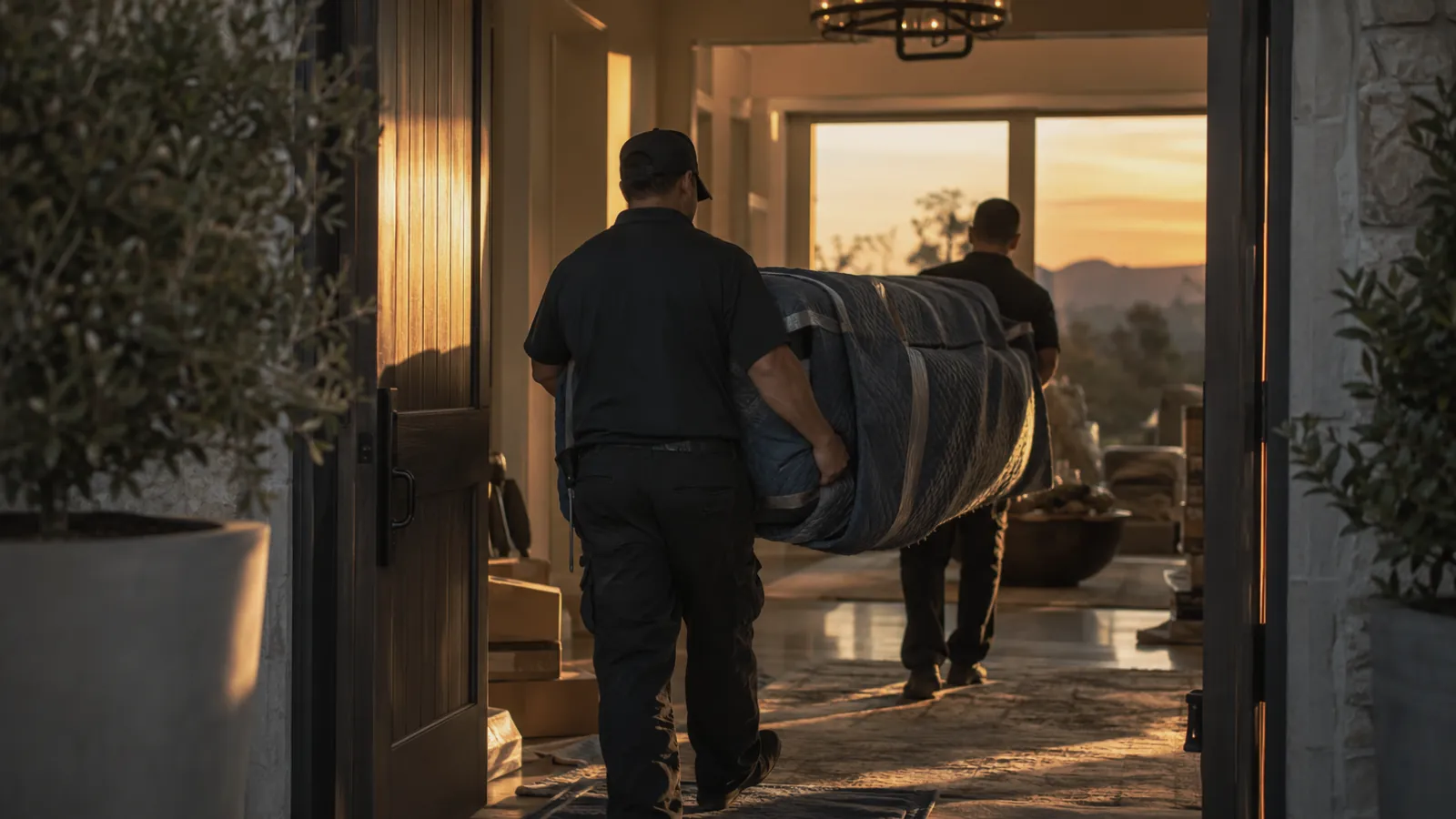
- Trained people, not gig drivers. Uniforms, shoe covers, floor protection.
- Placement. The piece goes exactly where the client wants it, including up the stairs and around the tight corner on the landing.
- Assembly and debris removal where it applies.
- A clean, signed proof of delivery with photographs, not a scribble on a screen.
- Immediate escalation when anything is off, with a real person in the office reachable in minutes.
Every one of those is solvable. None of them get solved by software that wasn't built for them.
Where generic logistics tools fall short
The standard last-mile platforms are tuned for volume. Thousands of stops a day, eight-hour shifts, drivers with a week of training, two-hour windows treated as a luxury. They route well and they track well. They do nothing for the parts that make white-glove what it is.
They have no field for "the crew leader's name goes in the confirmation email." They have no way to say "against the north wall, box flattened and taken away." They cannot express "two trained handlers, one certified for basic assembly." So the white-glove operator who is forced onto one ends up with a folder of side spreadsheets, a private group chat, and a lot of phone calls, which is the exact mess the software was supposed to end.
What a white-glove platform looks like
A platform built for this work has a few non-negotiables. It treats each delivery as a small project rather than a stop on a route. It carries client notes forward from one delivery to the next, the dog's name, the service entrance code, the side door that doesn't latch, so the second visit is better than the first. It gives the client a branded portal where they can see what's coming, when, and from whom, without calling the office. And it drops condition photos and the signed proof of delivery into the job record on their own.
It also has to bill correctly. White-glove pricing has variables, flights of stairs, long carries, packaging removal, a Saturday slot, and they have to land on the invoice without anyone typing them in a second time. Every minute a dispatcher spends fixing an invoice is margin gone.
The trust feedback loop
White-glove clients stay loyal because they get remembered. Any single delivery can be polished. What they come back for is the crew that knew not to ring the bell because the baby was asleep. The dispatcher who texted that traffic was bad and moved the window an hour. The portal that showed which pieces were in storage and which were on the truck, without anyone having to ask.
Software is what lets that memory scale. One good crew lead can hold twenty clients in their head. A growing operation can't. The platform becomes the institutional memory, and the white-glove promise is whatever that memory makes good on.
An honest test
If your customers pay you a premium and your operation looks the same as a parcel carrier's, one of two things is true. You're overcharging for the experience, or you're underinvesting in the systems that make it real. The companies that own this category five years from now will be the ones running it as a software-backed service business instead of a freight line. The phrase will keep getting abused. The experience won't lie.