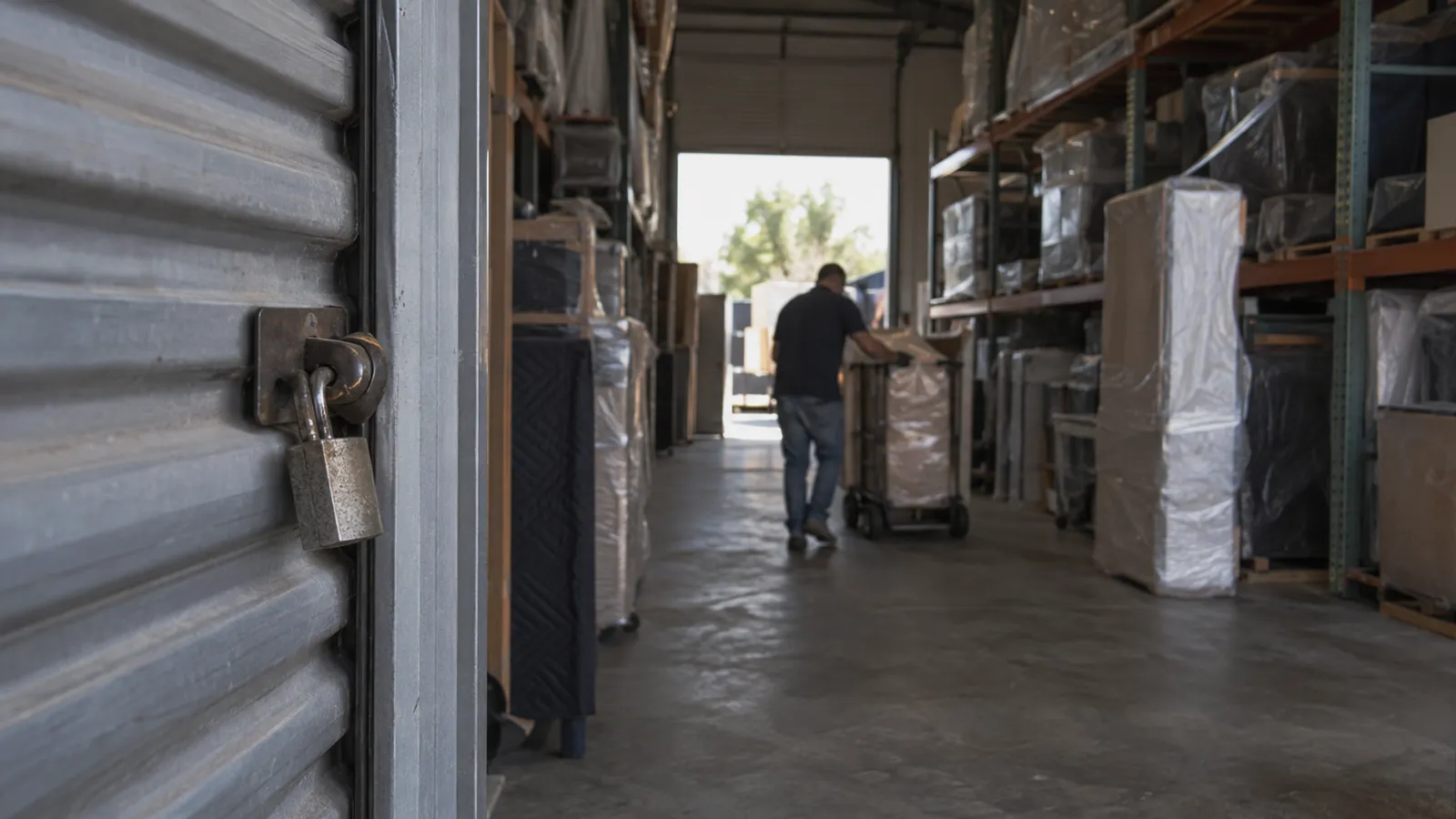
Item-Level vs. Pallet-Level Inventory: A Framework for Choosing the Right Granularity
Item-level inventory is not always the right answer. A short test for choosing between item, carton, and pallet granularity.

There is a quiet assumption in a lot of warehouse and storage marketing: that item-level inventory is always the better choice. It isn't. Granularity is a decision with real costs on both sides, and the right answer depends on what you store, who owns it, and what the customer expects to be able to ask you for.
A simple framework
The right granularity is the smallest unit a customer will ever ask you about. If someone calls and says "can you get me the box with the holiday decorations," you need carton-level inventory. If they say "can you get me the leather chair," you need item-level. If all they ever say is "can I have my pallet back," you need pallet-level, and anything finer is expensive overkill that nobody will thank you for.
When pallet-level wins
Pallet-level is right when the pallet is the whole story. The contents are homogeneous, a stack of identical cases of one SKU. The customer is a business that keeps its own SKU detail and only needs you to store and ship full pallets. Receiving and shipping happen in full pallets, in and out. And cataloging every unit inside would cost more than it would ever save.
This is the classic enterprise 3PL pattern, and there is nothing wrong with it. Pallet-level is fast to receive and cheap to run. The downside is that any request smaller than "ship the pallet" turns into someone with a box cutter and a flashlight.
When carton-level wins
Carton-level sits in the middle. It fits when each carton means something on its own (a case of a specific product, a customer's labeled moving box, a crate from an art shipper) but what is inside the carton is either uniform or the customer's job to track.
Most boutique 3PL operations live here. Cartons get a SKU, get scanned at receiving, get a bin, and get picked one at a time. A client can say "ship six cartons of SKU 4422 to this address" and the system can do exactly that.
When item-level wins
Item-level is right when every piece is unique or worth real money: art, furniture, AV gear, archival boxes. The customer wants to browse their own stuff in a portal and ask for specific pieces. Condition matters, so each item needs its own photos and its own damage history. And you charge for things that happen to individual items, like pulls, deliveries, photography, and repacks.
This is the white-glove, valet storage, fine art, and AV rental pattern. Intake is heavier, no question. But that per-item view is what makes item-based pricing, client portals, and the whole customer experience possible. You cannot build those on a pallet count.
You can mix
Real operations almost always mix. A white-glove operator runs item-level for the residential clients and pallet-level for the trade-show warehouse out back. A boutique 3PL runs carton-level for most clients and item-level for the one art consignor. The mistake is forcing one granularity on the entire operation because the storage software can only handle one. Good software lets each client, or even each project, pick its own level and still reports cleanly across all of them.
The honest tradeoff
Item-level is more work at intake. Carton-level is the safest default. Pallet-level is the cheapest to run. New technology has not changed any of that; it is closer to physics than to software. What software has changed is how cheap the finest option has become at intake, mostly through phone apps, QR labels, and photo capture built into the intake screen. The break-even point has moved, which is why more operators choose item-level now than ever did. But moved is not gone. Pick the granularity your customers actually ask for, and let the marketing argue with itself.