Inbound Receiving at a Boutique 3PL: The SOP That Prevents Client Disputes
Most 3PL disputes trace back to receiving. A step-by-step inbound SOP: advance notice, PO match, photos, discrepancies, and a same-day client report.

Ask a boutique 3PL where its client disputes come from and the honest answer is usually receiving. A client's system says 240 units shipped. The 3PL's count says 236. Six weeks later an order short-ships, the client blames the warehouse, the warehouse blames the carrier, and nobody has a photo of the pallet from the day it arrived. The argument is unwinnable for everyone, and it costs the relationship regardless of who was right.
A receiving SOP is the cheapest insurance a 3PL can buy. The one below is what well-run boutique operations converge on. None of it is exotic. All of it depends on doing the same thing every time.
Before the truck arrives
Receiving starts when the client tells you something is coming. Require an advance notice for every inbound: the PO or shipment reference, the expected SKUs and quantities, the carrier, and the expected date. If the client sends a PO document, import it so the expected lines are already on the receipt before the truck backs in. A receiver checking a physical count against an expected count is doing verification. A receiver counting cartons with no expectation is doing data entry, and data entry is where discrepancies hide.
Advance notice also lets you bill correctly. Inbound that arrives unannounced is real work that usually goes unbilled, which is one of the leaks covered in how billing automation stops revenue leakage.
At the dock
The first five minutes set the record for everything that follows:
- Check the seal and the pallet count against the bill of lading before signing. Note any exception on the carrier's paperwork. Once the driver leaves with a clean signature, carrier damage becomes your damage.
- Photograph every pallet as it comes off the truck, including any visible damage, crushed corners, or broken wrap. Timestamped photos on the receipt are the evidence in every future conversation.
- Stage by client. Nothing gets put away until it is counted, and nothing from two clients shares a staging lane.
Count at the level the client bills at
If the client's agreement is pallet-in, pallet-out, count pallets and confirm the carton count on the label. If the client ships individual units and expects unit-level accuracy, open cartons and count units, or count a statistically meaningful sample and record which cartons were opened. Do not promise unit-level accuracy on pallet-level receiving. The mismatch between what was counted and what the client believes was counted is the root of most disputes.
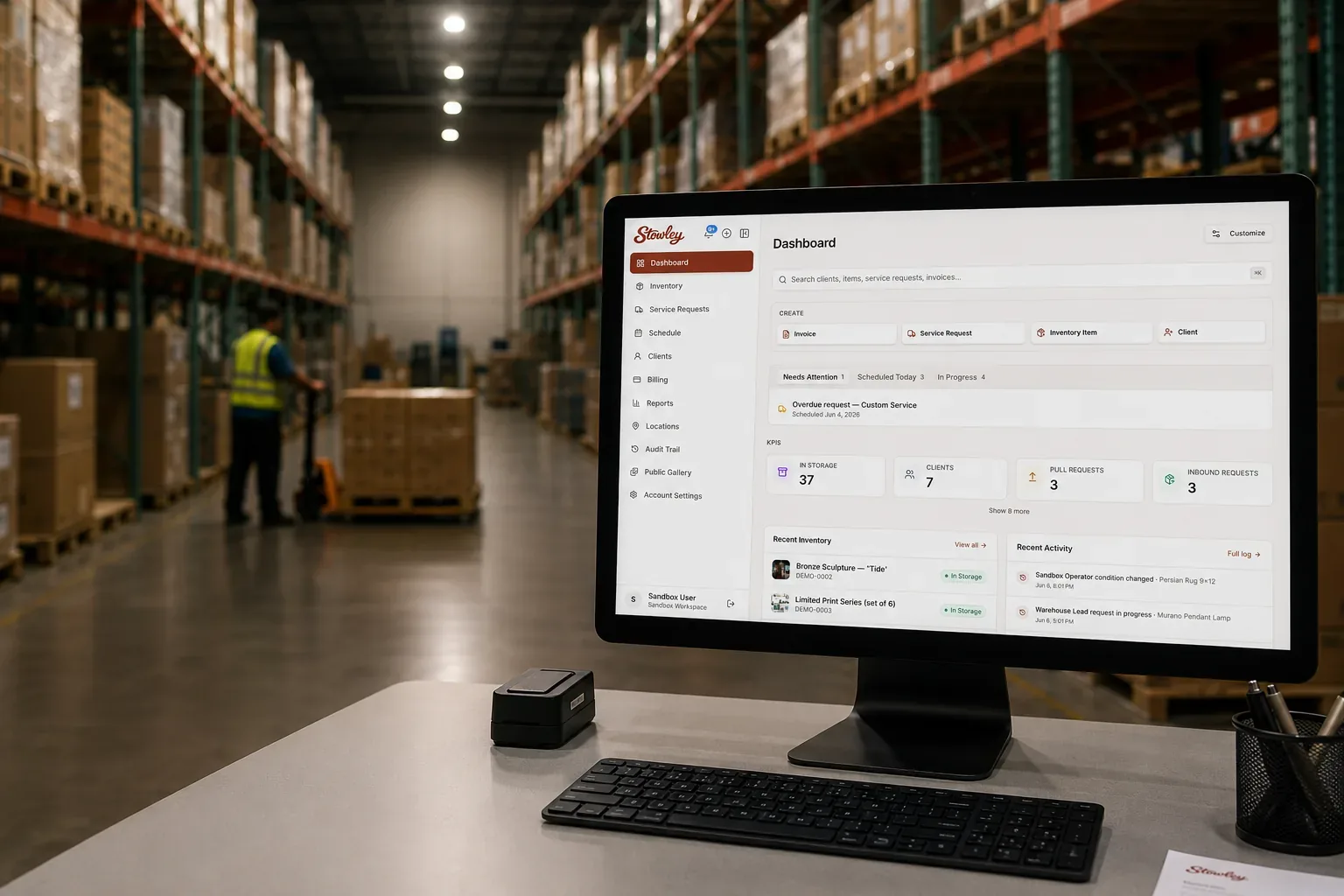
Scan every unit or carton into the system against the expected line. Software built for boutique 3PLs will show the variance immediately: expected 240, received 236, short 4.
Discrepancies, the same way every time
A discrepancy is not a problem. An unrecorded discrepancy is. Every short, over, or damaged line gets:
- The photo that shows it.
- A note on the receipt with the count and the condition.
- A status that flags the receipt as needing client review.
- Damaged units segregated into a quarantine location, not put away with good stock.
Then the receipt is closed with the actual counts, not the expected ones. Inventory reflects what is on the shelf. The client's expectation is a separate fact that the report will reconcile.
Putaway with a location
Every received unit goes into a named location, warehouse, zone, aisle, and bin, and the record carries it. "Somewhere in the back for Acme" is how a 3PL ends up doing a full recount at the worst possible moment. The location discipline set up during client onboarding is what makes putaway fast; the receiving SOP is what keeps it accurate.
The same-day receiving report
This is the step that ends disputes before they start. On the day the receipt closes, the client gets a report: expected versus received by line, photos of the inbound, any discrepancies with their evidence, and where the stock now lives. If the client's portal shows the same report, the email is a courtesy and the portal is the record.
A client who sees "short 4, here is the pallet photo, here is the carrier exception note" on receiving day files a carrier claim and thanks you. The same client discovering the shortage at order time blames the warehouse.
Bill the receive
Receiving is labor. Per-pallet or per-unit receiving fees, plus any per-carton inspection or labeling, should write themselves to the client's draft invoice when the receipt closes. This is one of the reasons to insist on advance notice and per-client rate cards: the receiving event and its rate are both known, so the line item is automatic.
Why the SOP holds
None of this is faster than tossing pallets into the racks. It is slower by a few minutes per receipt. It is also the difference between a 3PL that clients trust with their inventory and one they audit. The photo, the count against expectation, the location, and the same-day report are the four things a client cannot get from a spreadsheet warehouse, and they are what a boutique 3PL is actually selling.