Consignment Inventory for Galleries: Tracking Who Owns What, Where It Is, and What Happens When It Sells
Most gallery inventory isn't yours. A practical system for consigned works: ownership, location, terms, and the paper trail when a piece sells or returns.

Walk into most galleries and the majority of what is on the walls and in the racks belongs to someone else. Artists consign new work. Collectors consign pieces they are ready to sell. Estates consign whole groups. The gallery holds, shows, insures, and sells, and then settles up. It is a wonderful model for cash flow and a terrible one for record-keeping, because the most important fact about each piece, who owns it and on what terms, lives in an email thread or a signed PDF somewhere.
A consignment system does not need to be complicated. It needs to answer three questions about every work at any moment.
The three questions
Who owns it? Not who made it. Who has title today. For an artist's new work, the artist. For a secondary-market piece, the collector or estate. For a work the gallery bought outright, the gallery. This field decides who gets paid when it sells and who gets it back if it doesn't.
Where is it? On the wall, in rack B-4, out on loan to a museum, at a fair in a crate, at a framer, or at a photographer. Location changes constantly and a consigned piece that cannot be located is a liability, not an asset.
What are the terms? The consignment period, the agreed price or range, the gallery's commission, any minimum, and the return date. These are the fields that make the settlement automatic instead of an argument.
If your inventory record holds those three things reliably, everything else is reporting.
The consignment lifecycle
Every consigned work moves through the same stages, and the record should show which one it is in:
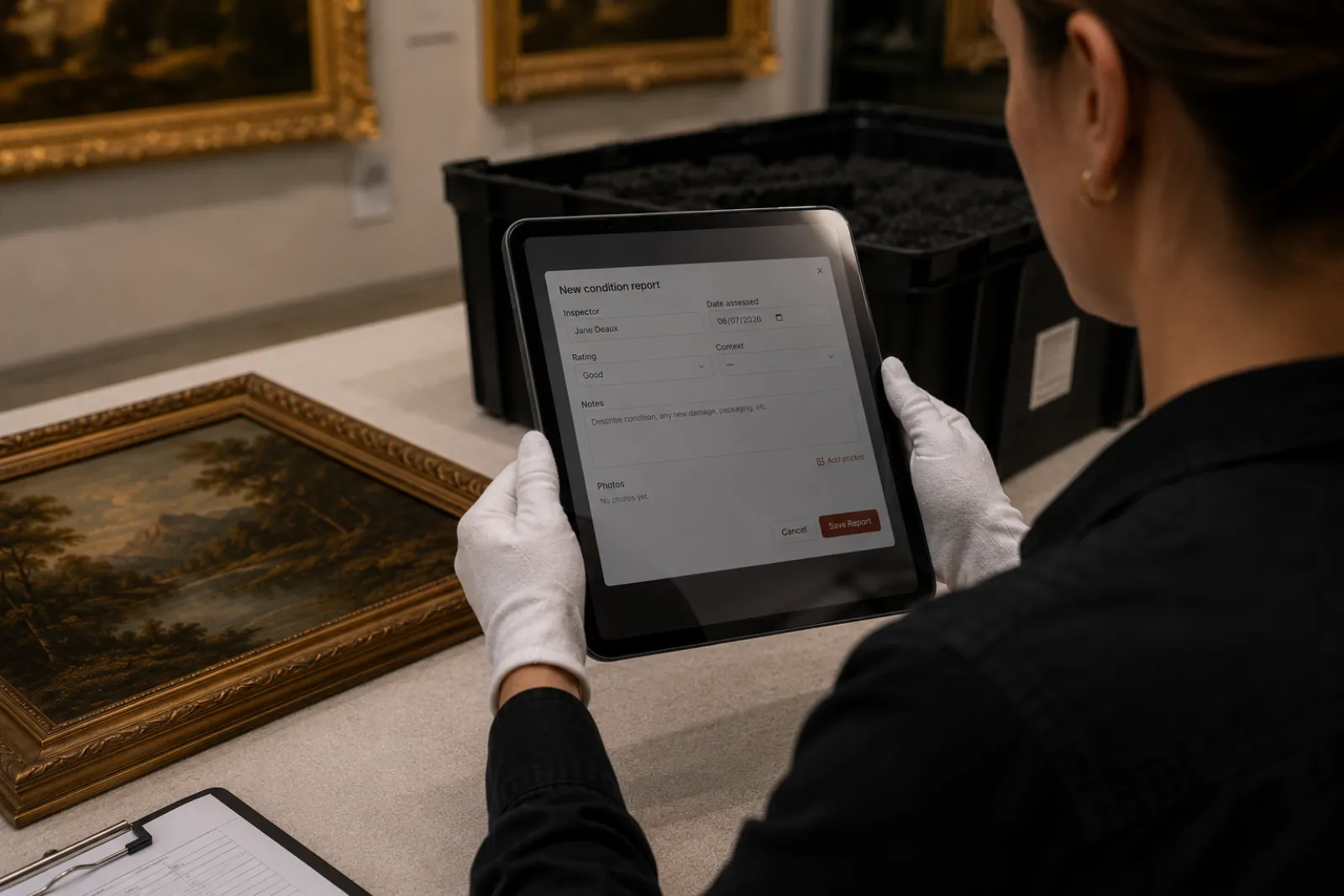
- Intake. The piece arrives with a consignment agreement. It gets a record, a condition report with photos, an insured value, and a location. The condition report at intake is what protects the gallery when the work goes back; digital condition reporting makes this a ten-minute job rather than a form nobody fills in.
- On view or in storage. The work sits on the wall or in the rack. Location updates when it moves. Insurance is in force.
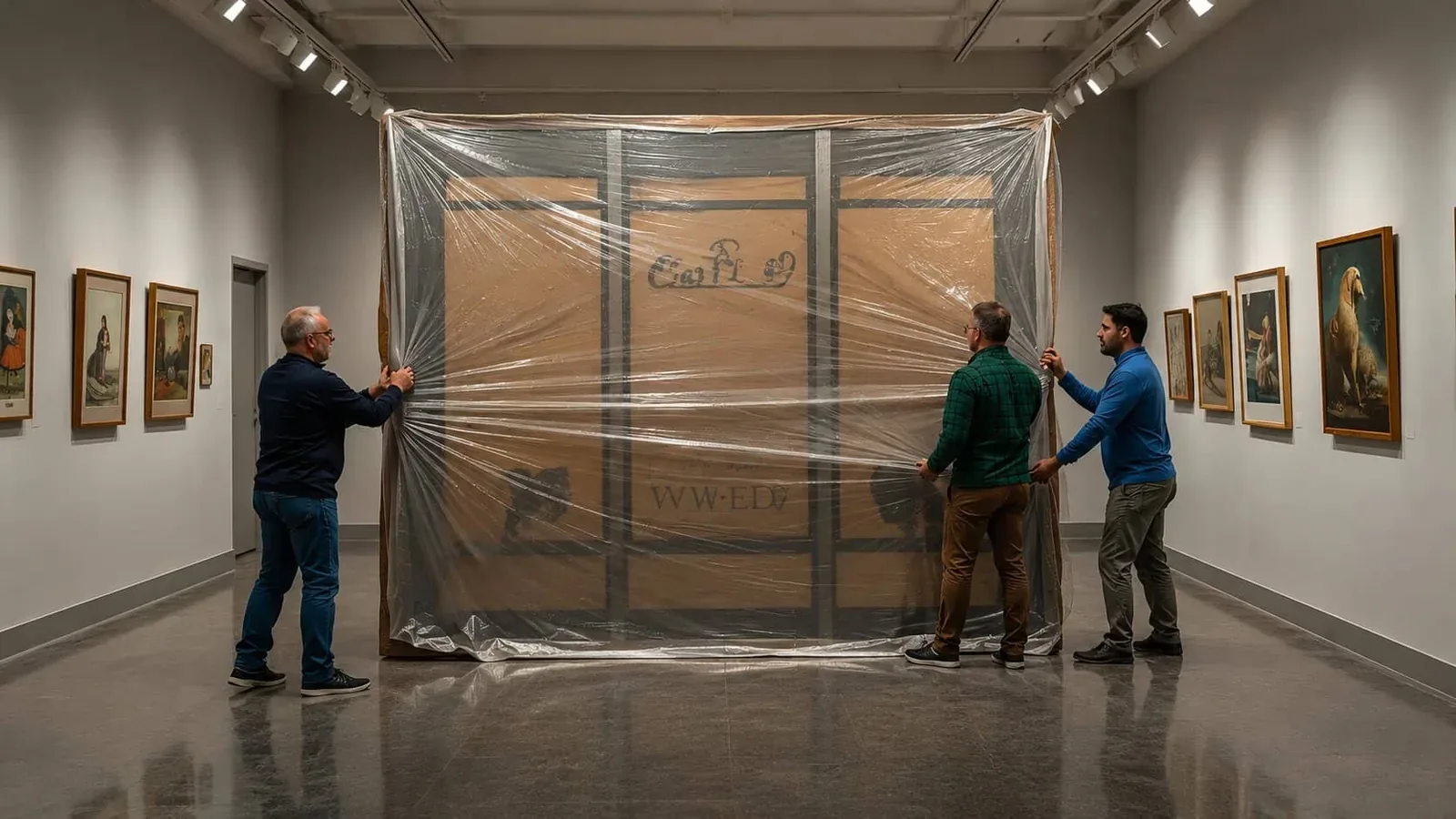
- Out. At a fair, on loan, or at a framer. The record shows the destination and the expected return date.
- Sold. Buyer, sale price, commission, and net to the consignor are recorded, and the settlement is generated from those fields.
- Returned. The piece goes back to its owner with a condition report that matches the one from intake. The record is closed, not deleted.
The stage that causes the most trouble is "Out," because it is easy to lose track of a work that is not physically in the building. A return date on the record, with a reminder, is worth more than any amount of good intention.
Consignment periods and the return-date problem
Most agreements run six or twelve months. Very few galleries have a reliable way to know which consignments expire next month. The result is either awkward conversations when a consignor asks for a piece back that the gallery forgot it still had, or works that sit unsold for years under terms nobody has revisited.
Put the consignment end date on the record. Report on it monthly. A short list of "expiring in the next sixty days" turns into a productive round of calls: renew, reprice, or return. That is how good galleries keep inventory moving.
Reporting to consignors
Artists and collectors want to know where their work is and whether it has sold. The galleries that handle this well give consignors a way to see their own pieces, with location, status, and photos, without calling. A client portal scoped to one consignor does this cleanly, and it removes the monthly "any interest in the large canvas?" email from the gallery's inbox. The same provenance and paper-trail discipline that protects the gallery at sale time is what makes those reports trustworthy.
Settlement without a spreadsheet
When a consigned work sells, the settlement is arithmetic: sale price, less commission, less any agreed costs, equals net to consignor. When the record holds the terms, the settlement statement generates itself and the audit trail shows exactly which terms it used. When the terms live in a PDF, someone reconstructs the math by hand, and every reconstruction is a chance for a mistake that costs a relationship.
What this looks like in practice
A gallery running consignment properly can answer, in under a minute, "what do we hold for this consignor, where is each piece, when does the agreement end, and what have we sold for them this year." Software built for fine art and galleries makes those four answers a single screen. That speed is not a convenience. It is the difference between a consignor who sends you their next piece and one who sends it across town.