White-Glove Delivery Software for Two-Person Crews
The two-person crew is the smallest viable unit of white-glove delivery. The software they carry decides whether the day runs smooth or sideways.
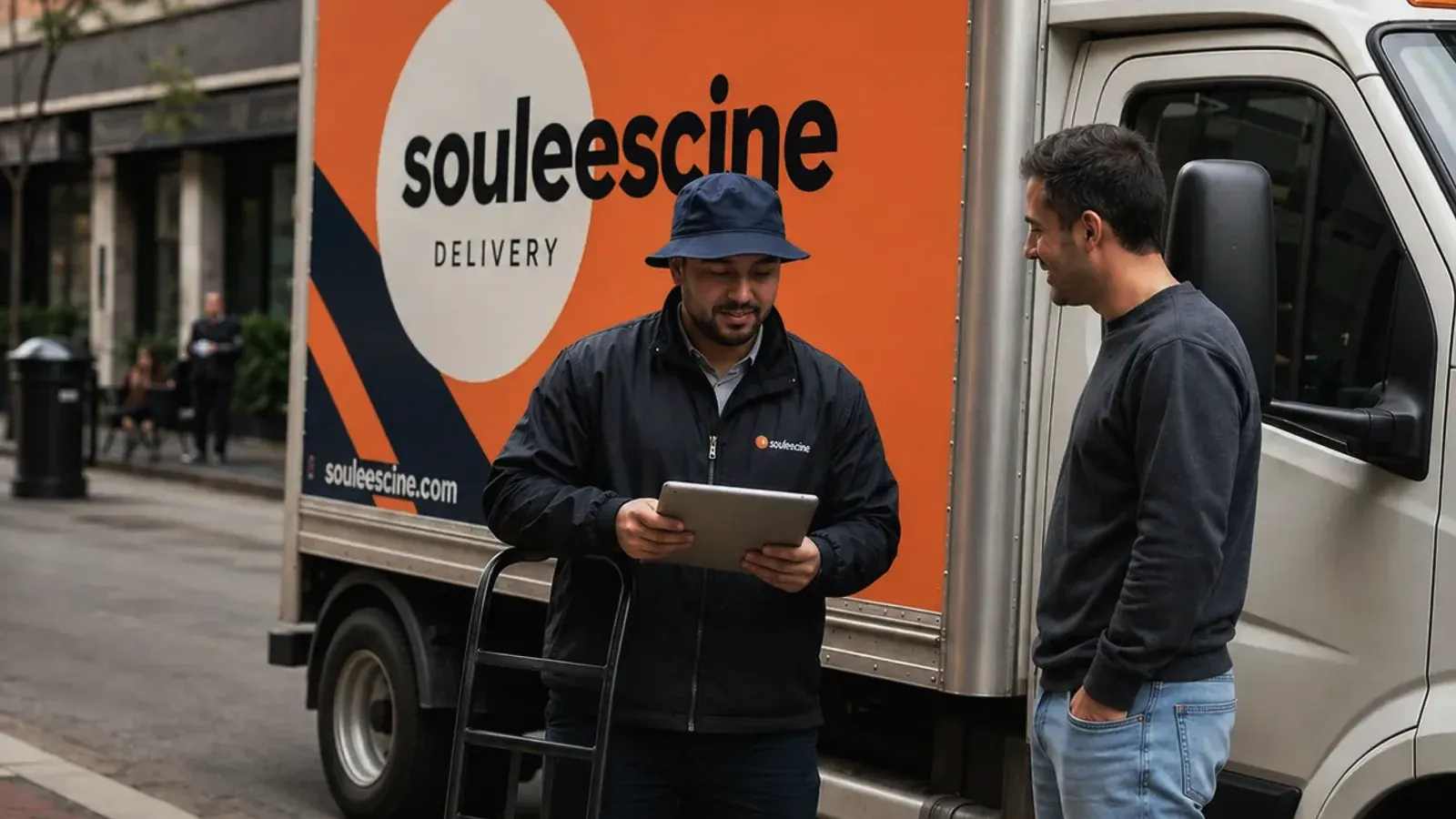
The two-person crew is the smallest unit of white-glove delivery that works. One person can't get a sofa up a flight of stairs without hurting themselves or the sofa. Three is too many for most stops, and you're paying the third to watch. So two is the unit the rest of the business has to be built around: dispatch, routing, truck size, payroll, insurance, what the customer hears and when.
What catches new white-glove operators off guard is how much of that is a software problem rather than a trucking problem. The same two people, in the same truck, on the same route, will have a very different day depending on what's running on the phone in the lead's pocket.
Here's what we'd put in that pocket in 2026, and why.
The crew app is the operating system
A two-person team needs one app that covers the whole day. Two apps means somebody has the wrong window open at the wrong moment, usually while the customer is watching. At minimum the crew app has to handle:
- Today's manifest. Stops in order, with addresses, a contact, the items, special instructions, and access notes.
- Navigation. One tap for turn-by-turn to the next stop, with traffic-aware ETAs flowing back to dispatch.
- Pre-arrival communication. A text to the customer thirty minutes out, on arrival, and if the crew is running late. Sent automatically, with nothing for the crew to do.
- Inventory check at pickup or in-warehouse. Scan the items, confirm the contents, photograph anything new.
- Proof of delivery. Photos of the piece in place, the customer's signature, and a condition acknowledgement, all uploaded before the truck leaves.
- Damage and exception reporting. Two taps to report a damaged item, a refused delivery, or a locked loading dock, with photos.
- Time and mileage capture. Automatic. The crew should never have to remember to clock in.
If any of these means switching apps, the crew will skip it when they're running behind, and the data that was supposed to run the business won't exist.
What the crew should not have to do
What the app spares the crew from matters as much as what it does. These two people are moving fast and carrying heavy things most of the day. The app should never ask them to:
- Handle cash or take a payment in person. Payment is on file before the truck moves.
- Type long notes. Voice-to-text, or a short list of exception codes they can tap.
- Re-enter anything dispatch already knows.
- Wait for a sync. Offline-first, syncing on its own when signal comes back. A surprising amount of expensive furniture gets delivered in basements and high-rise stairwells with no bars at all.
Every one of these is a stop that runs three minutes long. Three minutes across twelve stops is a missed last window, and that's the customer who calls the next morning.
What dispatch sees in real time
The other half is what dispatch and the manager can see while the crew is out. The right white-glove delivery software gives dispatch one screen with:
- Live position of every truck and crew.
- Current stop, ETA to the next one, and status (en route, on site, done).
- Exception alerts as they happen, so a problem in the field shows up now and not at 5pm.
- One click to call or text the crew without changing tools.
When a customer phones at noon asking when the truck will get there, the dispatcher should have an honest answer in fifteen seconds with nobody on hold. That one exchange decides whether you get the next order.
The hardware question
Crews need rugged phones or tablets with a good camera. Consumer phones get dropped off a liftgate, run out of battery by 2pm, and have a cracked screen by the second month. A rugged device pays for itself in three replacements you don't buy. Mount one on the dash, give the second to the lead, and the team has a workspace that holds up for the day.
Where multi-app stacks go wrong
The most common way to equip a two-person crew badly is what we call the tab stack. Navigation in one app, dispatch chat in a second, inventory in a third, signatures in a fourth, and a paper copy in the door pocket just in case. The crew spends its attention on switching tools instead of on the customer. Photos end up in the wrong place or on someone's personal phone. Signatures go missing. Three weeks later a damage claim comes in and there's no way to defend it, because the evidence is spread across four tools and a clipboard.
A single crew app inside the same platform that runs dispatch, billing, and customer comms is far more reliable. The individual features aren't necessarily better. The difference is that everything the crew captures lands in the right place on its own.
What a great delivery day looks like
A well-equipped two-person team in 2026 starts the morning with the manifest already on their phones. They drive to the first stop while the customer gets a text they didn't have to send. They finish the delivery with photos and a signature uploaded before they're back in the cab, and roll to the next stop without opening anything else. When the last stop is done they tap "complete," and the timesheets, mileage, and proof of delivery are already where they need to be.
If your crews end the day with a stack of paper, a list of texts to send the office, and photos still sitting on their own phones, the software is doing the wrong job. You're paying for it twice: once in the subscription, and again in every stop that ran long.
The white-glove operator page walks through this day as Stowley runs it, from the morning manifest to the signed proof of delivery.