Pull Sheets, Truck Packs, and Returns: Turning an Event Quote Into a Verified Load-Out
The gap between what was quoted and what left the warehouse is where events go wrong. A scan-based pull, pack, and return process that closes it.
The worst phone call in event rental comes at 4 p.m. from a venue forty miles away. The wireless mic kit is not on the truck. It was on the quote. It was on the pull sheet. Somebody was sure it went out. Now a tech is driving back for it, the client is watching the clock, and a job quoted at a healthy margin is losing money by the minute.
The gap between what was quoted, what was pulled, what got loaded, and what came back is the whole operational core of an event rental business. Closing it is a process question, and the process is scanning. Four scans, to be exact, and we'll get to them.
The quote is the pull sheet
First principle. The pull sheet is the quote, translated into the specific units that will leave the building. Nobody should be writing it out by hand from the quote. When the order is confirmed, the system generates the pull list from the quoted line items: twelve of this fixture, four of that case, and the cabling that goes with them. The warehouse manager reviewing that list is looking for availability conflicts. Nobody is transcribing anything.
This is also where sub-rental needs show up early, which is the only time they're cheap. A pull list showing eight units required and six in the fleet is a sub-rental order placed a week out, instead of a scramble the afternoon before. The playbook for sub-rentals and cross-hires starts right here.
Pull by scan, not by checkmark
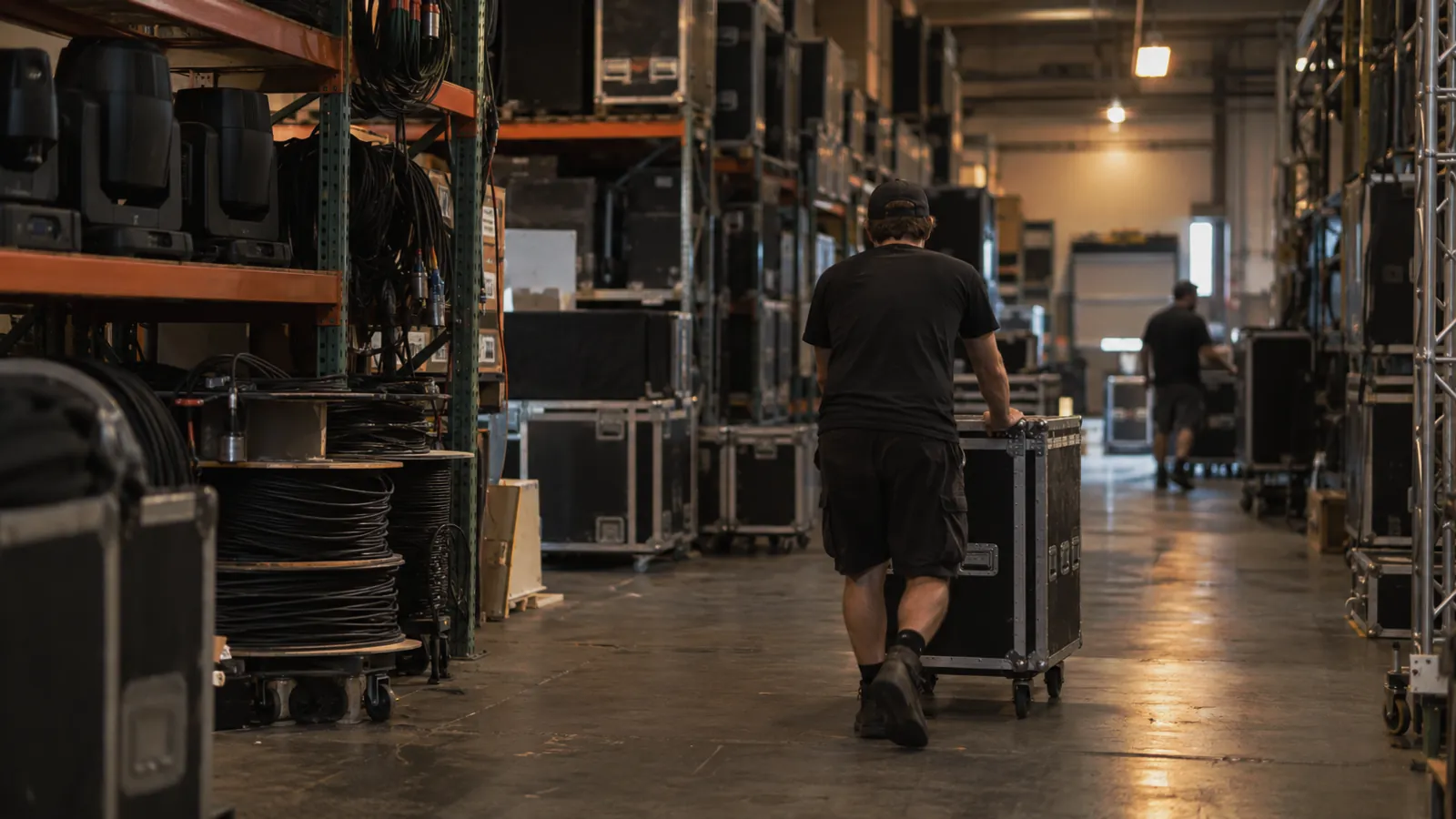
Every case, fixture, and kit gets scanned against the pull sheet as it comes off the shelf. A pen can't do what the scan does. The scan records which specific unit went, by serial or asset ID, so the return can be checked against it and the utilization history means something. It flags shortages on the spot. Eleven scanned against twelve required is a visible gap while the truck is still in the yard. And it records substitutions. If a different model went out in place of the one quoted, the scan shows it, and the quote gets adjusted before the invoice instead of argued about after.
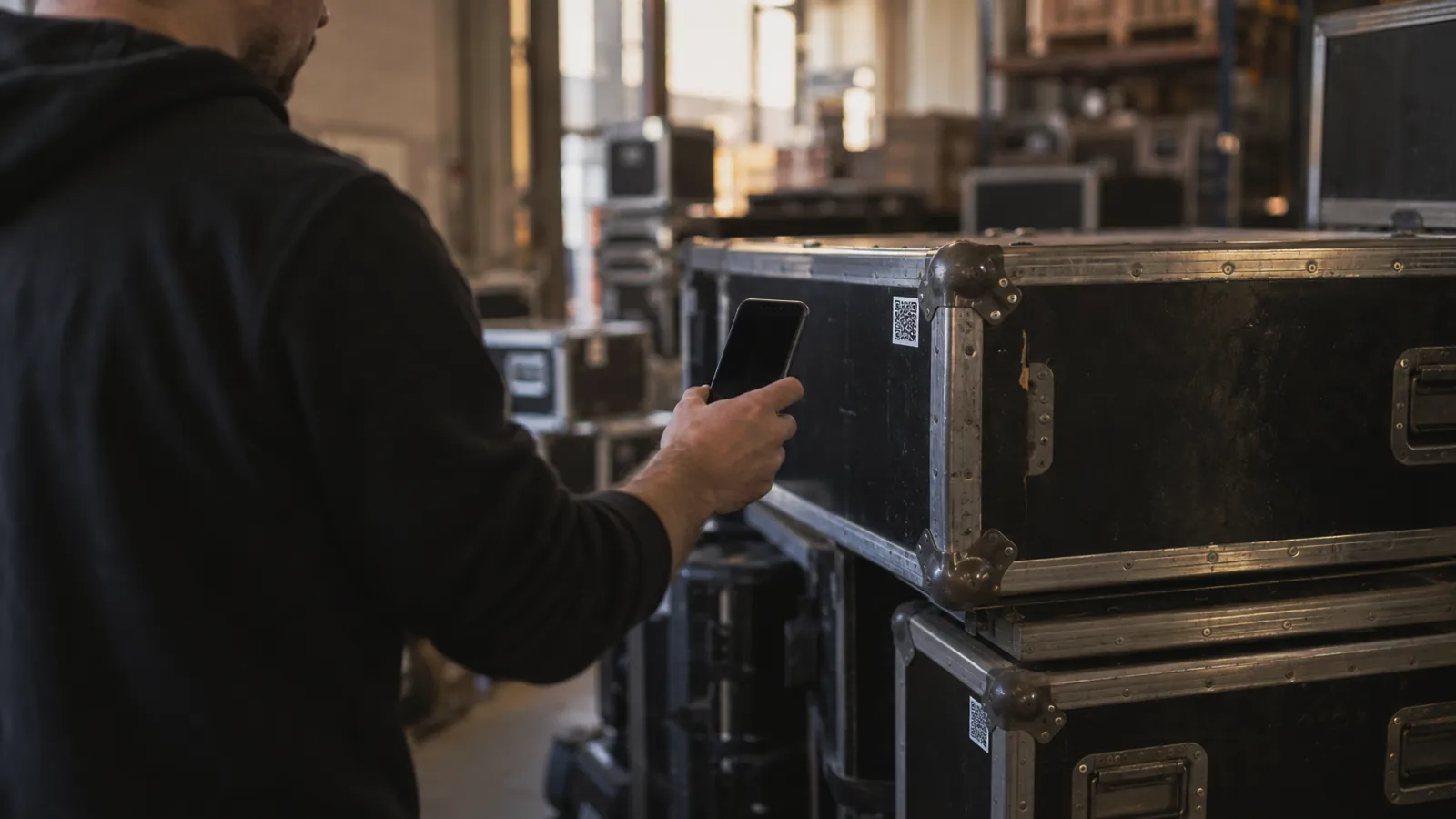
Kits deserve their own note. A mic kit with two handhelds, a receiver, and cables should scan as a kit, with its contents verified, so a kit that went out missing its receiver gets caught at the pull and not at the venue. That is the payoff of the QR label on the road case. The label identifies the case. The kit record says what is supposed to be inside it.
Pack by truck
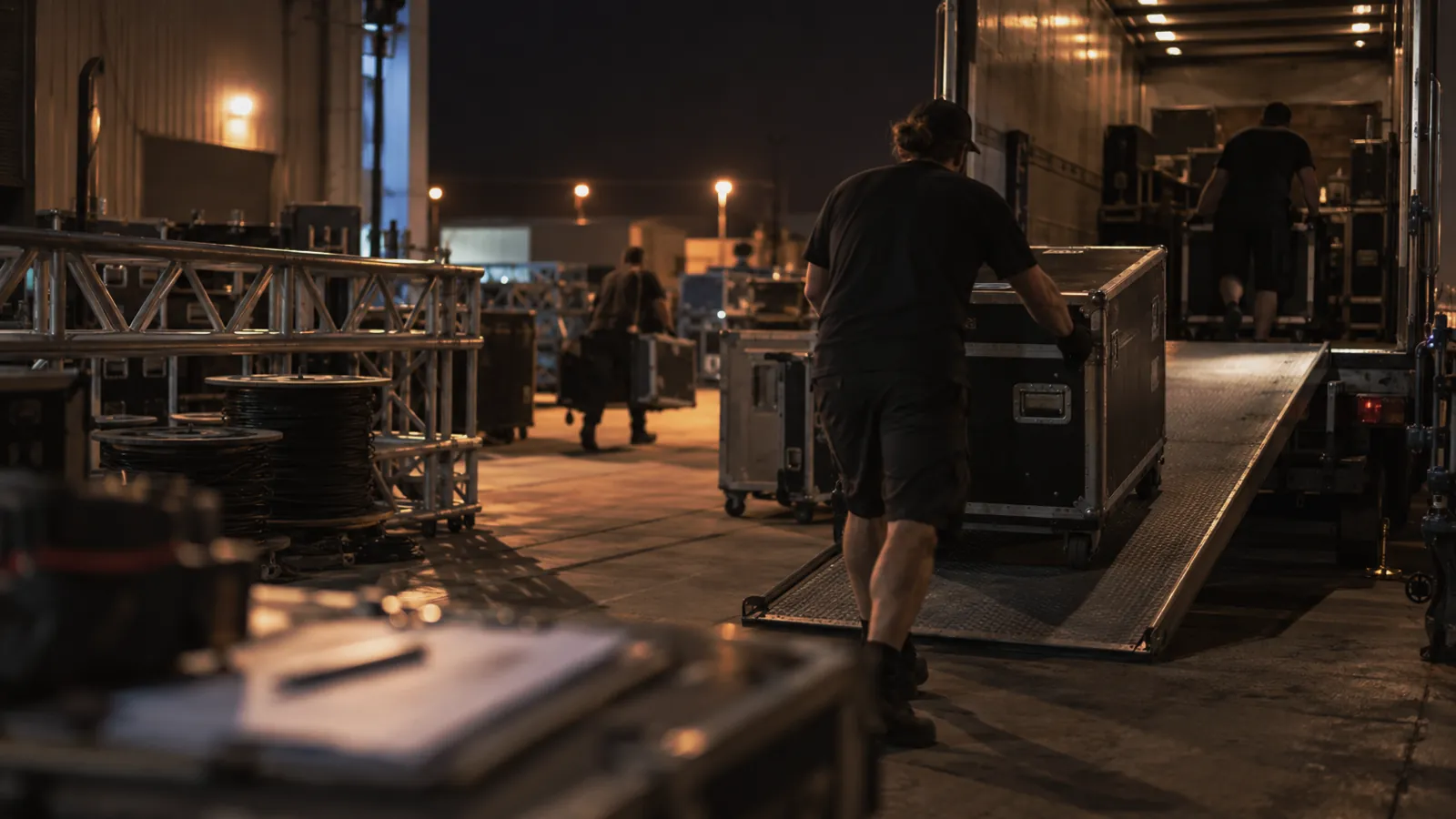
On a multi-truck job, the pull sheet becomes truck pack lists: which cases go on which vehicle, and in what order. A scan onto the truck confirms the case is loaded, and the crew lead on site has a list per truck to check against at unload. When the mic kit is missing, the pack list tells you whether it was never pulled or was pulled and loaded onto the other truck. Those are different problems with different fixes, and one of them is a two-minute walk across the parking lot.
On-site check
A crew lead with the pack list on a phone can verify the load on arrival in a few minutes. Anything missing is known before setup starts, while there's still time to do something about it. Anything the client adds on site gets recorded as an addition, with a name and a time, so it makes it onto the invoice instead of being remembered fondly by the crew and billed by nobody.
Returns reconciliation
The return scan closes the loop. Every unit gets scanned back in and checked against what went out, and there are three ways that can go:
- Returned in good condition. Status goes back to available and the utilization record closes.
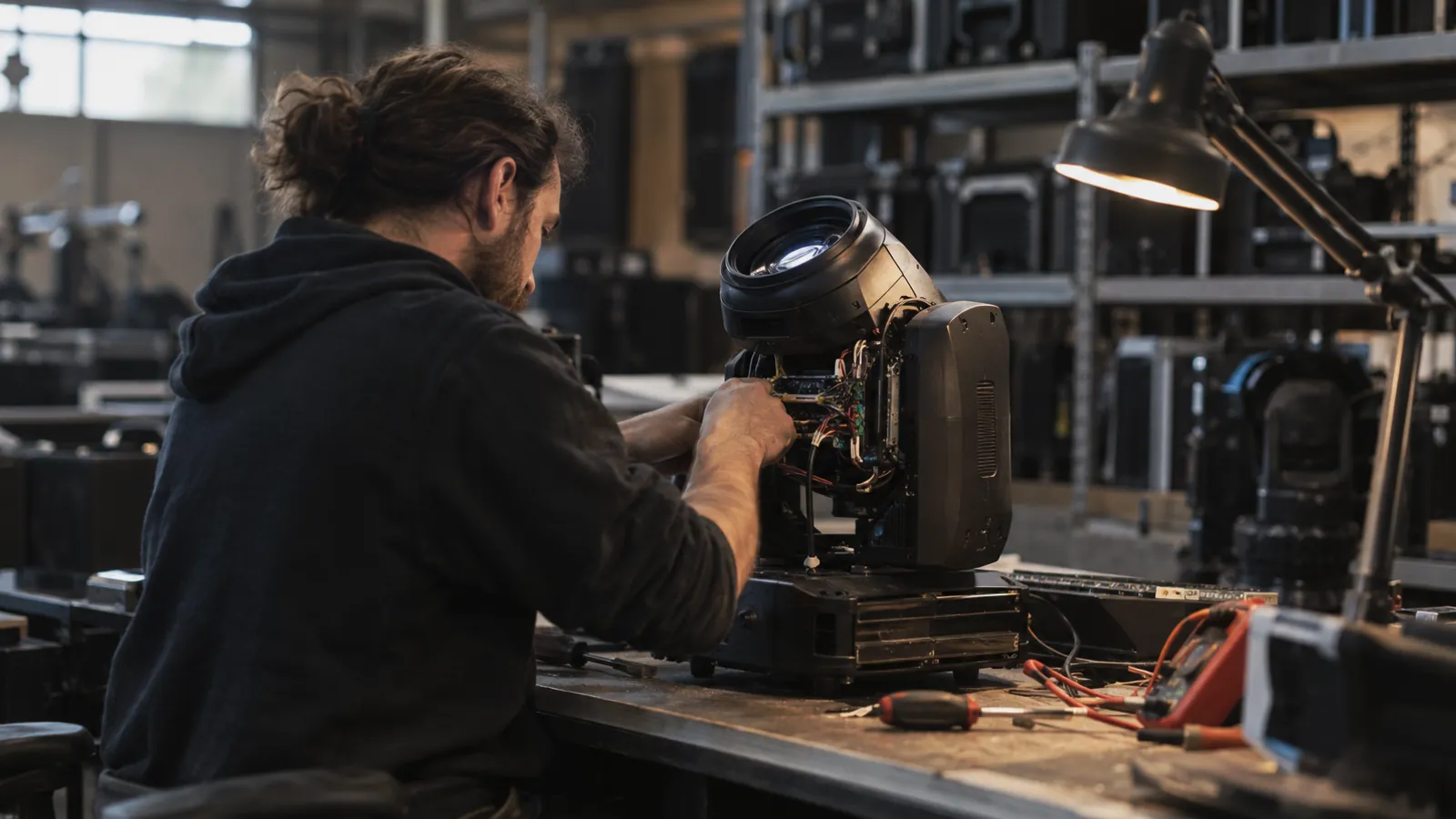
- Returned damaged. Photographed, flagged for maintenance, and charged where the contract allows. The maintenance workflow in tracking downtime so gear pays for itself picks it up from there.
- Not returned. Missing units are the client's problem to sort out, but only if you can show they went out. The pull scan is that proof, and a missing-item charge on the invoice is routine when there's a scan history behind it.
Reconcile the day the truck gets back, not the following week. Gear that isn't scanned back in isn't available for the next pull. A warehouse where returns pile up unscanned is a warehouse where next weekend's pull sheet is already wrong.
Tie it to the invoice
The final invoice is the quote plus whatever changed: substitutions, on-site additions, damage, missing items. When each of those is a scan event with a timestamp, the invoice gets generated from the job rather than reconstructed from memory, and the client can see the evidence behind every line. Disputes drop sharply when the missing-item charge arrives with the pull scan and the return scan sitting side by side.
What it takes
A label on every case, a scanner on every phone, and the discipline to scan at four points: pull, load, unload, return. Software built for event and AV rental turns those four scans into the pull sheet, the pack list, the return report, and the invoice.
The 4 p.m. phone call doesn't go away entirely. Nothing makes it go away entirely. But it gets rare, and when it does come, everyone knows exactly which truck to look in before anybody gets in a car.