Interior Designer Receiving Warehouse Playbook
Interior designers need one place to receive, inspect, store, and install. Here's the receiving workflow that turns a designer into a repeat account.

Interior designers are the best client a white-glove warehouse can have. They send a steady stream of high-value pieces from dozens of vendors, every one of those pieces has to be held until an install date, and they'll pay for the service, because the alternative is their own garage and their own back. They're also the most demanding client you'll have. A single damaged piece discovered on install day can wreck a project they've spent months on, in front of the homeowner.
Winning designer accounts comes down to one workflow, and it's receiving. Get it right and designers send you everything. Get it wrong once and they quietly move across town.
What designers are actually buying
Take a designer with a sofa coming from a manufacturer in North Carolina, a rug from a dealer in New York, and lighting from a showroom in Los Angeles. Three ship dates, three carriers, three chances for damage, and none of it can go to the client's house until the day everything installs together. What that designer wants from a receiver is easy to say and hard to do:
- Every piece inspected the day it lands, with photos, and any damage reported that same day so a claim can go in while the carrier is still on the hook.
- Every piece stored by project, not by arrival date, so the whole install can be pulled in one go.
- One place to see what has arrived, what's still out there, and what shape it's in.
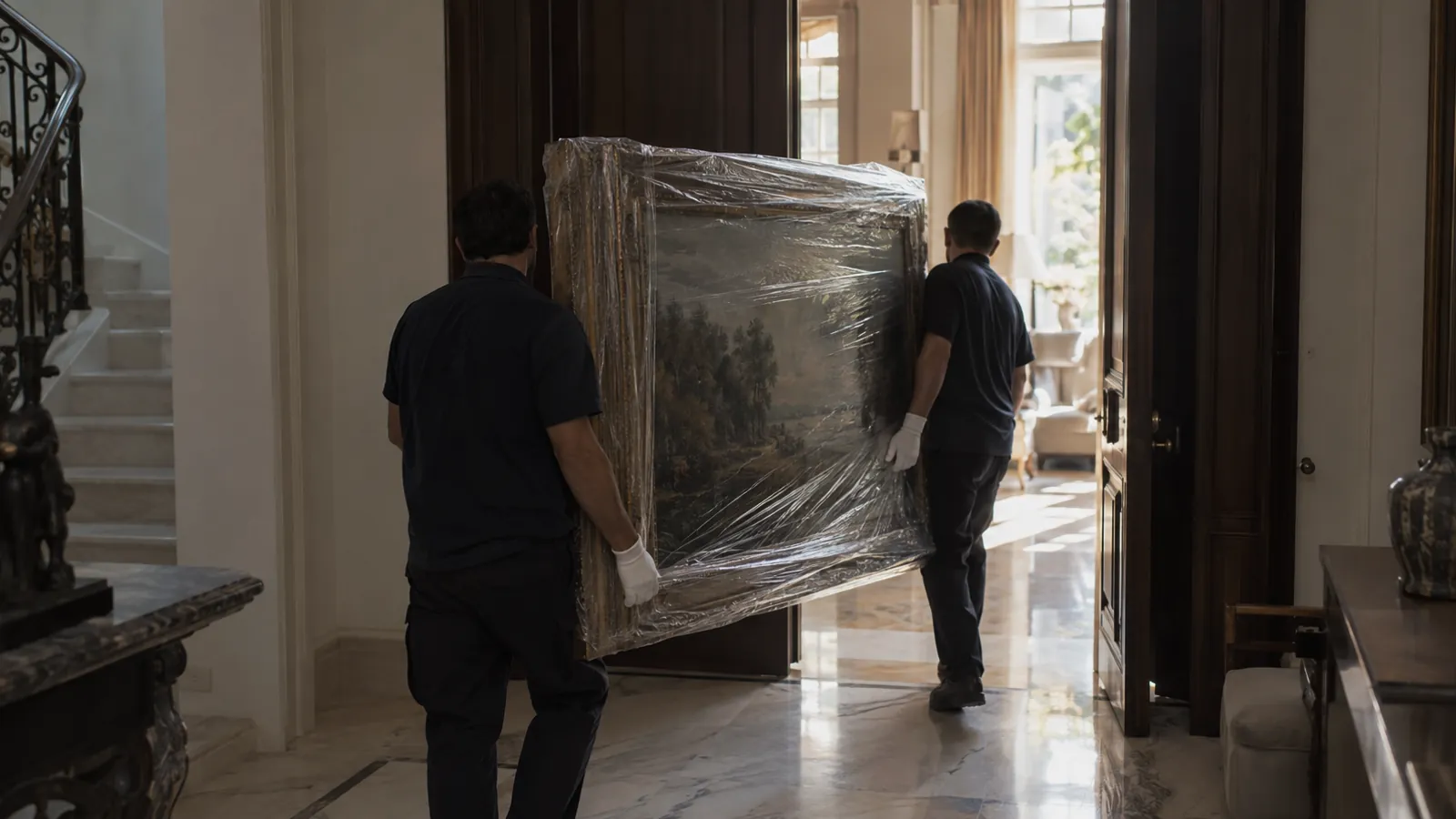
- One delivery on install day, with a crew that unwraps, places, assembles, and hauls the debris away.
Everything else, including price, comes after those four.
The receiving workflow that earns trust
The receivers designers stay with run the same sequence on every inbound piece, every time.
Advance notice. The designer or the vendor sends the PO or the tracking number ahead. The piece is expected before it shows up, already tagged to a project, and nobody on the dock has to guess whose it is.
Inspect on arrival, not later. Open the box or pull the wrap far enough to see the piece. Photograph it from every side. Record the condition on the item record while the carrier's paperwork is still in your hand. If there's damage, those photos and that timestamp are the claim.
Same-day report. The designer gets a notification with the photos and the condition, good or bad. Bad news on day one is a problem to solve. Bad news on install day is a disaster.
Store by project. Location is assigned by client and project, so the Hamptons install lives together on the floor even though its forty pieces trickled in over eleven weeks.
Pull for install as one request. When the date is set, the designer requests the project, not forty line items, and the crew pulls it as a unit.
This is the workflow white-glove delivery software exists to run. Item-level records, photos at intake, project grouping, and a portal are the same features that serve private clients. A designer is a professional who uses them every week.
The portal is the account manager
A designer juggling six projects does not want to email you for status. A portal that shows each project, each piece with its receiving photos, and each item still outstanding is the difference between a client who trusts you and a client who is always checking up. The portal features designers care about most are project grouping, condition photos, and the ability to request a pull, or a partial pull, without picking up the phone.
The portal also gives the designer something to show their own client. A homeowner who can see that the dining table arrived in perfect condition three weeks ago is a calmer homeowner, and a calmer homeowner is easier on everyone.
Pricing that reflects the work
Designer receiving has a natural rate card. A receiving and inspection fee per piece. Monthly storage by piece or by volume. A pull fee. And the install delivery, priced on crew time and how hard the job is. Keep the receiving fee visible and separate on the invoice. It's the service designers value most, and folding it into storage makes the whole account look expensive for the wrong reason.
The failures that lose the account
Two failures end designer relationships more than anything else. The first is damage found on install day that was there on arrival, because nobody looked. The second is the wrong pieces on the truck, because storage was by arrival date and the pull was done from memory. The same thing fixes both: a photographed, project-tagged record for every piece the moment it hits your dock.
How to pitch it
Designers hear "we do white-glove delivery" from everybody. What they almost never hear is "every piece is photographed and inspected the day it arrives, you see it in your portal that same day, and your install pulls as one request." Lead with the receiving workflow and the portal. Show them a project view on a screen. The delivery crew closes the deal, but receiving is what opens the door.
If this is the account you want, the receiving software for interior design warehouses page shows the intake, portal, and install request flow end to end.